
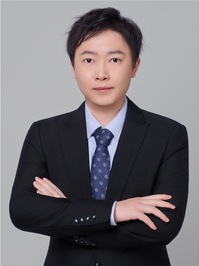
高宇擎
博士、长聘副教授、博士生导师
联系地址:上海市四平路1239号同济大学土木楼B512
邮政编码:200092
电子邮件:yuqing27@tongji.edu.cn 或 gaoyuqing@berkeley.edu
招生方向
智能建造(土木)、人工智能(人工智能学位,仅博士,上海自主智能无人系统科学中心)
2027年入学的硕士、博士均已招满。欢迎报考2028年硕士与博士!
教育经历
2016.08 - 2020.05 University of California Berkeley,Civil and Environmental Engineering,博士,导师:Khalid M. Mosalam
2016.08 - 2020.05 University of California Berkeley,Computer Science (计算机科学),博士第二学位,导师:John F. Canny
2016.08 - 2020.05 University of California Berkeley,Statistics (统计学),博士第二学位,导师:Aditya Guntuboyina
2015.08 - 2016.05 University of California Berkeley,Civil and Environmental Engineering,硕士,导师:Khalid M. Mosalam
2014.09 - 2015.05 上海交通大学,计算机科学与人工智能,委培
2010.09 - 2014.06 同济大学,建筑工程系,学士, 导师:陈以一
工作经历
2024.01 - 至今 同济大学,结构防灾减灾工程系,副教授
2023.11 - 2023.12 同济大学,结构防灾减灾工程系,特聘研究员
2020.06 - 2023.10 University of California Berkeley,Civil and Environmental Engineering,Postdoctoral Researcher,导师:Khalid M. Mosalam
研究方向
主要研究方向为基于人工智能的结构健康监测、结构智能设计和结构智能防灾,包括但不限于:
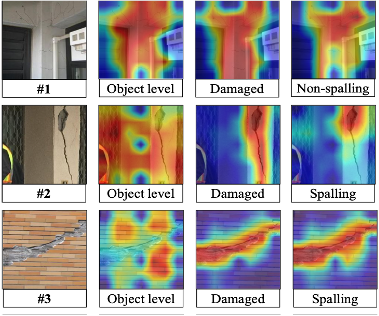
基于人工智能的结构健康监测
生成式人工智能与结构设计
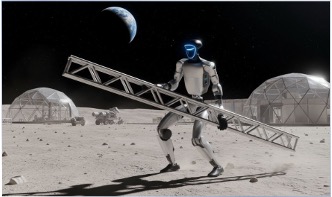
智能防灾人形机器人
基于多模态大语言模型的结构智能防灾
基于强化学习的数字孪生与模型更新
计算机视觉与深度学习
智能防灾人形机器人 (遥操作) |
智能防灾人形机器人(月球建造) |
智能结构健康监测 | 基于强化学习的模型更新 |
主要荣誉和奖励
入选全球前2%顶尖科学家榜单
《Computer-Aided in Civil and Infrastructure Engineering》期刊2021年度最佳论文奖
《Engineering Structures》期刊2022年度最佳论文奖第二名
IEEE第四届人工智能、人机交互与机器人国际会议(AIHCIR 2025)最佳论文奖
主要科研项目
基于人工智能的结构状态识别与韧性防灾,2024-至今,国家自然科学基金项目(主持)
基于多模态特征融合与可解释性人工智能的结构状态识别,2024-至今,上海市青年科技启明星-扬帆计划(主持)
基于多模态数据的结构健康监测,2024-2025,同济大学高层次人才科研项目(主持)
极端事件下的桥梁快速评估系统,2020-2023,美国太平洋地震工程研究中心(PEER)
自动化韧性建筑工地监测系统,2020-2023,清华-伯克利深圳研究院(TBSI)
基于数据驱动的结构健康监测,2017-2020,清华-伯克利深圳研究院(TBSI)
学术专著
Mosalam, K. M., Gao, Y. (2024). Artificial Intelligence in Vision-Based Structural Health Monitoring. Springer.
代表性论文
已发表第一/通讯作者SCI期刊论文40余篇,包括ESI高被引Top1%论文、土木领域顶刊《Computer-Aided in Civil and InfrastructureEngineering》与《EngineeringStructures》最佳论文、人工智能领域顶会和最佳论文、期刊Top-Cited/MostDownload等高质量论文,篇均影响因子超7.5。代表性论文如下:
结构智能健康监测:
Gao, Y., & Mosalam, K. M. (2018). Deep transfer learning for image‐based structural damage recognition. Computer‐Aided Civil and Infrastructure Engineering, 33(9), 748-768.
Gao, Y., Kong, B., & Mosalam, K. M. (2019). Deep leaf‐bootstrapping generative adversarial network for structural image data augmentation. Computer‐Aided Civil and Infrastructure Engineering, 34(9), 755-773.
Gao, Y., & Mosalam, K. M. (2020). PEER Hub ImageNet: A large-scale multiattribute benchmark data set of structural images. Journal of Structural Engineering, 146(10), 04020198.
Gao, Y., Zhai, P., & Mosalam, K. M. (2021). Balanced semisupervised generative adversarial network for damage assessment from low‐data imbalanced‐class regime. Computer‐Aided Civil and Infrastructure Engineering, 36(9), 1094-1113.
Gao, Y., & Mosalam, K. M. (2022). Deep learning visual interpretation of structural damage images. Journal of Building Engineering, 60, 105144.
Gao, Y., Yang, J., Qian, H., & Mosalam, K. M. (2023). Multiattribute multitask transformer framework for vision‐based structural health monitoring. Computer‐Aided Civil and Infrastructure Engineering, 38(17), 2358-2377.
Yang, X., Gao, Y. (共同第一作者), Fang, C., Zheng, Y., & Wang, W. (2022). Deep learning‐based bolt loosening detection for wind turbine towers. Structural Control and Health Monitoring, 29(6), e2943.
Zheng, Y., Gao, Y.*, Lu, S., & Mosalam, K. M. (2022). Multistage semisupervised active learning framework for crack identification, segmentation, and measurement of bridges. Computer‐Aided Civil and Infrastructure Engineering, 37(9), 1089-1108.
Gu, Z., Lu, W., Fan, Y., & Gao, Y.* (2023). Automated simplified structural modeling method for megatall buildings based on genetic algorithm. Journal of Building Engineering, 77, 107485.
Wang, Z., & Gao, Y.* (2025). RT-FEMU: A reinforcement and transfer learning-based framework for continuous finite element model updating. Journal of Building Engineering, 114459.
Lin, Y., Gao, Y. (共同第一作者), Fang, C., Lyu, Z., & Cheng, X. (2026). X-Bolt: an explainable vision-based framework for bolt loosening detection using a novel visual target. Structural Health Monitoring, 14759217251403370.
结构智能设计:
Fang, C., Ping, Y., Gao, Y.*, Zheng, Y., & Chen, Y. (2022). Machine learning-aided multi-objective optimization of structures with hybrid braces–Framework and case study. Engineering Structures, 269, 114808.
Fu, B., Gao, Y. (共同第一作者), & Wang, W. (2023). Dual generative adversarial networks for automated component layout design of steel frame-brace structures. Automation in Construction, 146, 104661.
Fu, B., Wang, W., & Gao, Y.* (2024). Physical rule-guided generative adversarial network for automated structural layout design of steel frame-brace structures. Journal of Building Engineering, 86, 108943.
Fu, B., Gao, Y.*, & Wang, W. (2024). A physics‐informed deep reinforcement learning framework for autonomous steel frame structure design. Computer‐Aided Civil and Infrastructure Engineering.
Leng, H., Gao, Y., & Zhou, Y. (2024). ArchiDiffusion: A novel diffusion model connecting architectural layout generation from sketches to Shear Wall Design. Journal of Building Engineering, 98, 111373.
Du, M., Gao, Y.*, Wang, W., & Fu, B. (2025). FrameGym: A reinforcement learning environments for steel frame structures. Engineering Structures, 343, 120991.
Li, J., Wang, W., Fu, B., & Gao, Y.* (2025). FrameDiffusion: A latent diffusion model for intelligent layout design of steel frame-braced structures. Engineering Structures, 343, 121195.
Du, M., Wang, W., Gao, Y.*, & Fu, B. (2025). MAFO-3D: A multi-agent reinforcement learning framework for efficient optimization of 3D steel moment-resisting frames. Engineering Structures, 345, 121574.
Fu, B., Gao, Y.*, Wang, W., & Du, M. (2026). Autonomous component optimization method for steel braced frame structures based on multi-agent and physics-informed deep reinforcement learning. Advanced Engineering Informatics, 69, 103878.
Li, J., Gao, Y. (共同第一作者), Wang, W., Lian, Z., & Fu, B. (2026). Deep reinforcement learning-based design optimization method for suspended ceiling systems of space grid structures. Advanced Engineering Informatics, 72, 104482.
Zhang, F., Gao, Y.* (通讯作者), Fang, C. (2026). Mechanics-coupled deep reinforcement learning for automated design of internal supporting structure in foundation pits. Automation in Construction, 188, 107001.
结构智能防灾与人形机器人:
Chai, Y., Gao, Y.*, Lu, W., & Lu, X. (2026). VertInspect: Learning-based humanoid whole-body control for glass curtain wall inspection. Advanced Engineering Informatics, 73, 104590.
Wang, Z., Gao, Y.*, Zhou, Y., He, J., Peng, J., & Lu, W. (2026). Towards next-generation autonomous structural health monitoring and inspection with humanoid robots. Computer-Aided Civil and Infrastructure Engineering, 100007.
Chai, Y., Gao, Y.*, & Lu, W. (2025). Humanoid Whole-Body Control for Glass Curtain Wall Inspection Scenarios. In 2025 4th International Conference on Artificial Intelligence, Human-Computer Interaction and Robotics (AIHCIR). IEEE.
学术组织兼职
中国土木工程学会太空分会理事
中国钢结构协会钢结构设计分会理事
担任30余本SCI期刊审稿人,如Computer-Aided in Civil and Infrastructure Engineering,Automation in Construction与Earthquake Engineering and Structural Dynamics等
联系地址:上海市四平路1239号同济大学土木大楼B座 电话:021-65982666 传真:021-65982668 邮箱:ddms@tongji.edu.cn 邮编:200092
Copyright © 2018 同济大学土木工程学院结构防灾减灾工程系